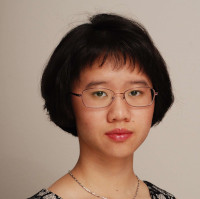
About Me
Introduction
I am a student in the master’s program for Human Language Technology at the University of Arizona, where I have learned NLP techniques like text tokenization and normalization, sequence labeling, and dependency parsing. I also practiced using machine learning approaches like Naive Bayes and Hidden Markov Models. I have gained experience with test-driven development and object-oriented programming in Python as well as various libraries like spaCy, NLTK, and TensorFlow, which I hope to apply in future projects.
My post-secondary education began with a bachelor’s degree in Economics at UCLA, where I also minored in Science Education. I then went on to earn a secondary teaching credential in Biology. I also qualified for a supplementary authorization in Chemistry, so I taught both subjects at the high school level. During my first year teaching, I also earned a master’s of arts degree in Curriculum and Instruction at CSUN. I spent another year teaching biology and middle school science before I decide to transition to Human Language Technology, where I felt I could make a greater impact. While working towards my degree in HLT, I took on the role of consumer service coordinator at one of California’s Regional Centers, which aims to spread equity, education, and awareness for people with developmental disabilities by connecting them and their families with services.
Why HLT?
When I was studying to become a teacher, one of the major lessons instilled in us was that all teachers were literacy teachers. Regardless of whether the subject was English, math, science, or history, teachers had a responsibility to hone students’ reading and writing skills. The advancement of technology and its growing presence in the classroom had both positive and negative consequences.
I had a class consisting almost entirely of English learners. Many spoke little to no English. I, on the other hand, spoke only English. Our main tool for communication, aside from strategies involving images and repetition, was Google Translate. Of course, machine translation is not perfect. There are biases in the data used to train the models, so I always reviewed the translations and corrected the errors I could catch using Spanish-to-English dictionaries and my own limited recollection of high school Spanish.
This sparked my interest in NLP and all that went into human language technology. Every student was issued a Chromebook for school use. Literacy, both traditional and technological, were vital for students to learn. However, the way students used their devices seemed to hinder more than help.
Though spellcheck and other writing assistant software tools have allowed students to proofread their work more easily, students have also become overly reliant on them. Some students saw no purpose in learning how to spell words because the Chromebook would figure out for them what they were trying to say. I felt that there had to be better ways to incorporate technology in learning, and thus began my journey into the world of HLT.
I hope to leverage the knowledge and skills I have gained through my master’s program at the University of Arizona to address the issues I have seen not only during my time as a teacher but even during my time now as a social worker. A career in educational technology with a focus on learning management systems and instructional design is of great interest to me. My goal is to find roles that emphasize digital literacy and find ways to combine the best that both technology and humans have to offer.